Don't buy “high flow” water purifier, 5 kinds of disadvantages, only the insiders know
Water purifier to buy 1000G or so on the line.
Here the “1000G”, refers to the flux of the water purifier. You can understand: the speed of the water dispenser. The larger the flux, the faster the water will come out - 2500G or more flux, the speed of water can be comparable to a faucet. So it looks like a large flux water purifier is kinda tempting doesn't it?
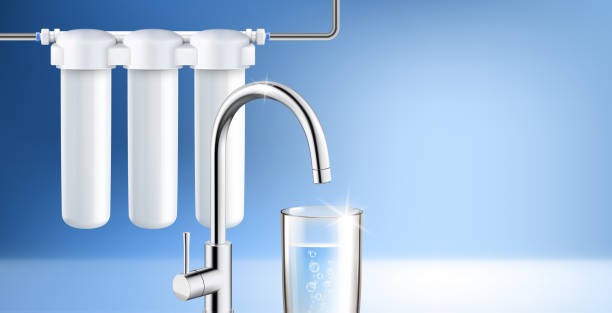
But as a one-year evaluation of a dozen water purifiers home blogger, Susan would like to say: buy large flux water purifiers, nine times out of ten will be cut leeks. Because of the large flux water purifier, generally face 5 kinds of defects....
01 hidden water tank
Ordinary people understand the flux is: water purifier while making water, making water fast, water can only be fast. But with the current technology, water purifier water production speed can reach up to 1800 G. Those who often two or three thousand gallons of flux, can only be obtained through the “hidden water tank” approach: the first water filtration, and then stored in the water tank. When you use water directly from the water tank, with a high-power pump, the water speed is naturally very fast.

But this practice has a big problem: the capacity of the tank is limited, generally 2L ~ 3L. continuous water, the water tank will run out of water. At that time there will no longer be so large flux, need to open a long wait.
02 Poor filtration effect
Water purifiers are able to filter tap water into pure water thanks to a cartridge inside: the RO membrane. You can understand the process of water filtration as the process of sifting flour, and the cartridge is the sieve. Improving the throughput and water production speed is to improve the speed of “sifting flour”.
How to increase the sieving speed? One of the methods is to change a larger aperture sieve: many water purifiers also do this, by increasing the aperture of the RO membrane to improve the water production speed. Consequences can be imagined, the sieve surface of the sieve eye becomes larger, the effect of the sieve surface will naturally deteriorate.RO membrane pore size becomes larger, the purity of the filtered water will naturally decline, simply put, the filtration effect becomes worse.
 03 high cost of core replacement
Think again, want to improve the speed of the sieve surface, in addition to the sieve eye to become larger, there is no other way? The answer is yes: the size of the sieve can be made larger. This approach is more “affordable”, it does improve the throughput of the water purifier, but also did not sacrifice filtration. But: RO membrane size becomes larger, the cost is certainly high. Here the “cost” is not only reflected in the purchase of the machine, after the annual replacement of filter cartridges, you will feel the heartache.

And Susan also found a feature: this type of water purifier cartridge are often special models, in the cartridge outside a layer of plastic shell. When you change the core, you can only buy high-priced consumables from the aftermarket, and there is no way to change the third-party cartridge....
04 stale water
The vast majority of regular brands of water purifiers will be through the front of this method (increase the size of the cartridge) to improve the water purifier throughput - after all, this is the only kind of practice that does not cheat people - but this practice has another drawback: more stale water! When the water purifier is working, water enters the RO membrane cartridge. When the water purifier stops working, there is some water left inside the RO membrane. This residual water will slowly seep towards the middle of the cartridge, contaminating the pure water pipes.

So every morning, the first cup of water, is this kind of contaminated water: this kind of water, called “stale water”. RO membrane size becomes bigger, the residual water in the RO membrane must be more. So the water seeped in more, the water pollution is greater, the amount of stale water will be more.
05Large volume
The two methods of “hiding the water tank” and “increasing the cartridge size” both increase the volume of the water purifier.

It can be clearly seen that the volume of a 3000G water purifier is about 1.5 times that of a 1200G water purifier. The water purifier usually needs to be installed in the cabinet under the sink, which already occupies a lot of space by the sink, but also the installation of pre-filter, KitchenAid, kitchen waste disposer and other kitchen appliances - plus such a large water purifier, almost the cabinet is completely occupied. If you buy a large deep sink, you may not even be able to fit it in.

 Analysis of the Structure and Working Principle of Ultrapure Water Equipment
 Tips for Using Home Water Purifier Filter Cartridges
 The Battle of Four Membranes: Microfiltration, Ultrafiltration, Nanofiltration, Reverse Osmosis—Which Reigns Supreme in Water Purification?
 Don't Pay for Stupidity! The Ultimate 2026 Water Purifier Guide: Selection, Pitfalls, and Maintenance All in One Article