Water purification information

Cleaning method for RO membrane of reverse osmosis pure water equipment

Views : 122496
Update time : 2021-09-01 11:52:45
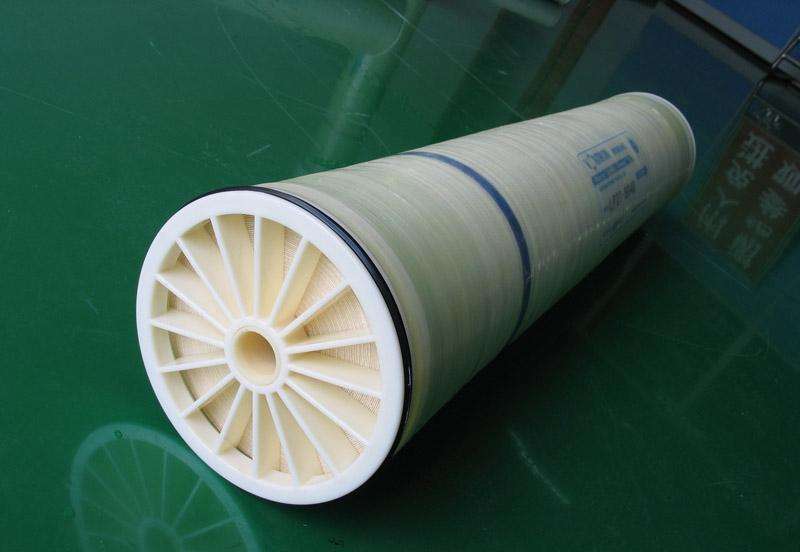
The RO membrane needs to be cleaned after the use of reverse osmosis pure water equipment for a long time. The common method is chemical cleaning. During the use of the laboratory ultrapure water machine, the RO reverse osmosis membrane will gradually become contaminated as the use time increases. Users need to maintain it regularly before normal use. In addition to replacing the RO reverse osmosis membrane, cleaning can also be improved Its service life is long, and the cost of frequent replacement of consumables can also be reduced. And chemical cleaning is one of the most suitable methods.
When cleaning the  reverse osmosis membrane of a water purifier with chemical agents, problems that need to be paid attention to

1. Add enzyme detergent and treat the membrane with enzyme detergent. It is particularly effective for organic pollution, especially for protein, oil and other organic pollution. If the cleaning effect is better at 50℃-60℃, it is generally running 10 After a day or half a month, use 1% enzymatic detergent to clean the membrane once at low pressure. Since the concentration of enzymatic detergent used is low, the immersion time is required to be longer.

2. Citric acid solution, use 1%-2% citric acid aqueous solution to wash the membrane continuously or cyclically under high pressure or low pressure. This method has a good cleaning effect on Fe(OH)3 pollution.

3. Concentrated salt water, it is effective to clean the membranes that are severely punished by limb pollution. This is because high-concentration salt water can weaken the interaction between colloids and promote colloidal aggregation to form micelles.

4. Hydrogen peroxide solution, such as diluting 0.5L, 30% H2O2 with 12L deionized water, and then cleaning the membrane surface. This method is particularly effective for organic pollution.

5. Water-soluble emulsion is very effective for cleaning membranes contaminated by oil and iron oxide, usually for 30-60 minutes.

Another is to use physical principles to perform cleaning. Usually, the physical cleaning method is to use low-pressure and high-flow membrane permeable water to rinse for 30 minutes, which can restore the membrane’s water permeability to a certain extent, but after a long time, the water permeability If it is still falling, you can also use a mixed fluid of water and air to wash the membrane surface at low pressure for 15 minutes. This method is effective for cleaning the membrane contaminated by organic matter in the initial stage.
Related News
Read More >>
Tips for Using Home Water Purifier Filter Cartridges Tips for Using Home Water Purifier Filter Cartridges
Feb .06.2026
The filter cartridge is the core component of a water purifier, primarily serving to filter impurities, adsorb harmful substances, and improve taste. Different filter cartridge types offer distinct purification capabilities
The Battle of Four Membranes: Microfiltration, Ultrafiltration, Nanofiltration, Reverse Osmosis—Which Reigns Supreme in Water Purification? The Battle of Four Membranes: Microfiltration, Ultrafiltration, Nanofiltration, Reverse Osmosis—Which Reigns Supreme in Water Purification?
Feb .05.2026
The Battle of Four Membranes: Microfiltration, Ultrafiltration, Nanofiltration, Reverse Osmosis—Which Reigns Supreme in Water Purification?
Don't Pay for Stupidity! The Ultimate 2026 Water Purifier Guide: Selection, Pitfalls, and Maintenance All in One Article Don't Pay for Stupidity! The Ultimate 2026 Water Purifier Guide: Selection, Pitfalls, and Maintenance All in One Article
Feb .04.2026
This guide breaks it all down—from comparing models,selection tips to pitfall avoidance,daily maintenance—so you can choose a practical option without overspending and avoid 90% of the hidden costs.
Working Principle and Core Technology of Water Softening Equipment Working Principle and Core Technology of Water Softening Equipment
Feb .03.2026
Its primary function is to efficiently remove calcium and magnesium ions from water through ion exchange technology,thereby reducing water hardness preventing equipment scaling and pipeline corrosion.