Water purification information

AICKSN water purifier: What is the difference between "water efficiency" and "wastewater ratio"?

Views : 143223
Update time : 2022-02-22 16:26:09
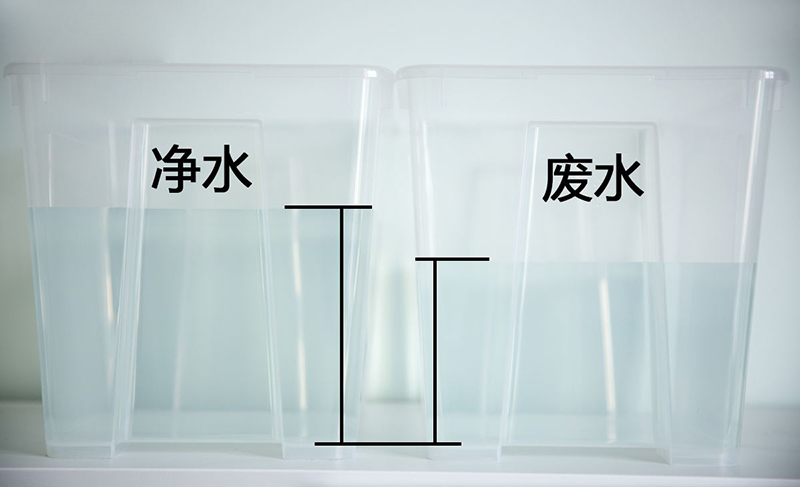
Due to the technical characteristics of cross-flow filtration, the reverse osmosis water purifier will definitely discharge concentrated water (commonly known as "wastewater"). In the industry, the term "wastewater ratio" is often used to refer to the utilization rate of water.
Then, the "water efficiency" in the national standard "Water Purifier Water Efficiency Limits and Water Efficiency Grades" (GB 34914-2021) (hereinafter referred to as the water efficiency standard) is the same as the "wastewater ratio" in the industry. What? What is the difference between the two?

01 Different test conditions and normative
The "wastewater ratio" is only an approximate ratio. The "water efficiency" needs to be tested in strict accordance with the test conditions stipulated in the "Water Efficiency Standard" before it can be rated.

02 Nominal requirements are different

"Wastewater ratio" does not require a label. After the implementation of the water efficiency standard, each reverse osmosis water purifier must be marked in a prominent position.


03 Representation is different

The "wastewater ratio" is expressed in a proportional way, for example, 1 part of purified water is produced and 1 part of concentrated water is discharged, and the "wastewater ratio" is expressed as 1:1. The "water efficiency" is expressed as a percentage. If the water efficiency is 60%, it means that the purified water obtained from the raw water is 60%, and the proportion of concentrated water discharged is 40%.


04 Different minimum limit requirements

After the implementation of the new water purifier water efficiency standard, the water purifier products on the market must meet the minimum level 3 water efficiency (45%) requirements. That is to say, "water efficiency" has minimum limit requirements, while "wastewater ratio" has no minimum limit requirements.
The above are some of the differences between "wastewater ratio" and "water efficiency". Another point to note is that both "wastewater ratio" and "water efficiency" are only applicable to reverse osmosis water purifiers.

05 Different meanings

The so-called "water efficiency" refers to the utilization efficiency of water resources, which is the ratio of the amount of purified water obtained to the total amount of water resources consumed. The water consumed by the water purifier for flushing is taken into account.

The "wastewater ratio" only examines the ratio of the flow rate of purified water to the flow rate of concentrated water discharged during water production by reverse osmosis membrane. It is enough to reflect the utilization efficiency of water resources, but only an operating parameter of the reverse osmosis water purifier.
Related News
Read More >>
Reverse Osmosis Scaling Right After Startup? Here's What You Need to Know About Prevention and Treatment! Reverse Osmosis Scaling Right After Startup? Here's What You Need to Know About Prevention and Treatment!
Dec .12.2025
Understanding the causes of reverse osmosis scaling,prevention mechanisms,treatment measures is crucial for ensuring efficient system operation,extending membrane lifespan,reducing operational costs.
Reverse Osmosis Scaling Right After Startup? Here's What You Need to Know About Prevention and Treatment! Reverse Osmosis Scaling Right After Startup? Here's What You Need to Know About Prevention and Treatment!
Dec .12.2025
Understanding the causes of reverse osmosis scaling,prevention mechanisms,treatment measures is crucial for ensuring efficient system operation,extending membrane lifespan,reducing operational costs.
Three Certain Trends in Commercial Water Purification Over the Next Five Years Three Certain Trends in Commercial Water Purification Over the Next Five Years
Dec .12.2025
Analasis 3 definitive trends shaping the commercial water purification market over the next five years and explores how these shifts will influence corporate decision-making and strategic direction.
Eight Different Methods for Pure Water Treatment Equipment Processes Eight Different Methods for Pure Water Treatment Equipment Processes
Dec .11.2025
Through multi-stage water filtration, harmful substances such as microorganisms can be removed, but this process also eliminates essential minerals like fluoride, potassium, calcium, and magnesium.