This question was asked by a customer today, and I'm sure we've all encountered this problem. Is the water purifier not effective? Then the first thing we need to understand is what is limescale? How to form.
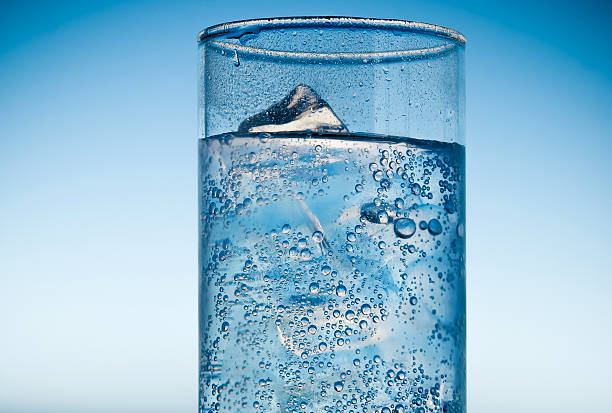
We often find a layer of white or yellowish-white hard deposits on the inner wall of the kettle, water heater, water heater and other appliances in contact with water, which is the scale. The main components of limescale are calcium carbonate, magnesium carbonate, calcium sulfate, magnesium sulfate and other salts. These components come from the minerals that naturally exist in water. Water in nature, whether surface water or groundwater, will dissolve a certain amount of minerals during the flow process. When the water contains high levels of calcium and magnesium ions, this water is known as hard water.
The formation of scale is closely related to the temperature change of water. At room temperature, calcium, magnesium ions and other minerals in water can be relatively stable dissolved in water, the solution is in an unsaturated state. This is what many users will say: not boiled when the water is normal, once boiled there will be scale. As the temperature rises, the solubility of these minerals is gradually reduced. Calcium carbonate, for example, at room temperature it has a certain solubility, but when the water temperature rises to close to the boiling point, its solubility will drop dramatically, the original dissolved in the water in the form of calcium carbonate will precipitate in the form of crystals, attached to the inner wall of the container, day after day, the formation of the scale visible to the naked eye. Life, like well water, spring water and other natural water without deep treatment, due to its water source itself rich in minerals, often higher hardness, heating is more likely to produce scale. Then why is there still scale after we filter it with a filter?
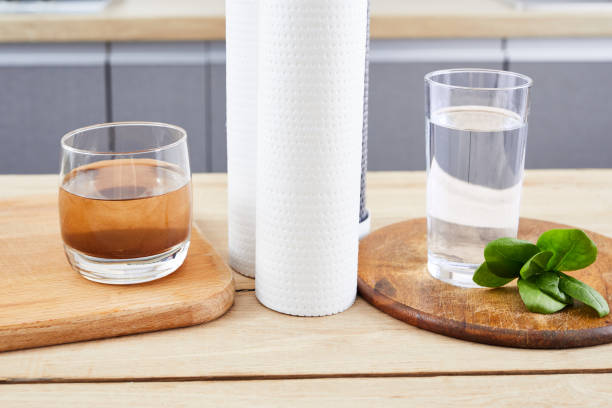
In fact, with your choice of water purifier related
Common ultrafiltration water purifier, its working principle is to use the microporous ultrafiltration membrane filtration, can effectively intercept the water bacteria, viruses, colloids, and macromolecular organics and other impurities, but for dissolved calcium, magnesium ions, ultrafiltration membrane is “powerless”. Therefore, if the installation is ultrafiltration water purifier, the calcium and magnesium ions in the water are still “intact”, and the heating will naturally produce scale.
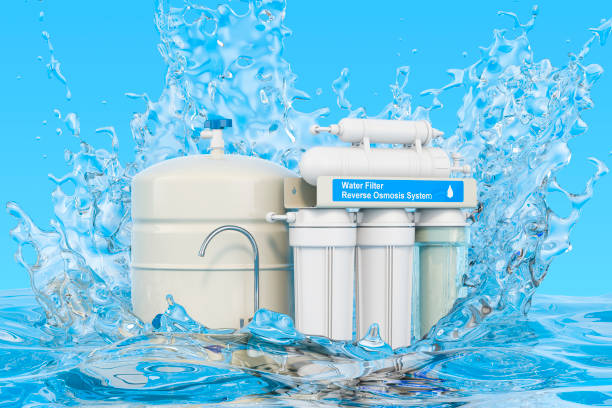
 Unlike this, reverse osmosis water purifier is called a “master” in removing limescale
. It relies on high-precision reverse osmosis membrane, under pressure, forcing water molecules to pass through, while almost all the impurities, including calcium and magnesium ions are rejected outside the membrane, which can greatly reduce the hardness of the water, and effectively reduce limescale production. However, if the reverse osmosis water purifier failure, such as reverse osmosis membrane damage, sealing is not tight, or after the activated carbon cartridge failure, etc., may also lead to part of the calcium and magnesium ions are not filtered clean “slipped” into the purified water, so that limescale again appear.
There is also a situation, even if the normal work of the water purifier, water quality if the water source is too poor, beyond the rated capacity of the water purifier, will also affect the purification effect. For example, some areas of water hardness is extremely high, calcium and magnesium ions in the water is seriously excessive, ordinary household reverse osmosis water purifier after a long period of time, may not be able to fully cope with such a high load of impurities, so that a small amount of calcium and magnesium ions penetrate the filtration barrier, triggering the problem of limescale.
Of course, if the ultrafiltration membrane water purifier and reverse osmosis water purifier compared to the latter in the treatment of limescale above the effect is better.
Will limescale harm human health? Limescale does not cause any direct and significant harm to human health. In human digestive system, stomach acid has strong acidity, when the water containing limescale enters into the stomach, calcium carbonate, magnesium carbonate and other components in the limescale can react with stomach acid, most of them will be decomposed and transformed, and then absorbed by human body in the form of ions or discharged from the body. The effects of limescale on human health can be effectively minimized by choosing suitable water purifiers, cleaning water equipment regularly and paying attention to drinking water safety.

 Water Purifier Pitfalls to Avoid: Plug-in vs. Plug-free Models Understand These Key Points to Choose Right for Your Home Without Wasting Money
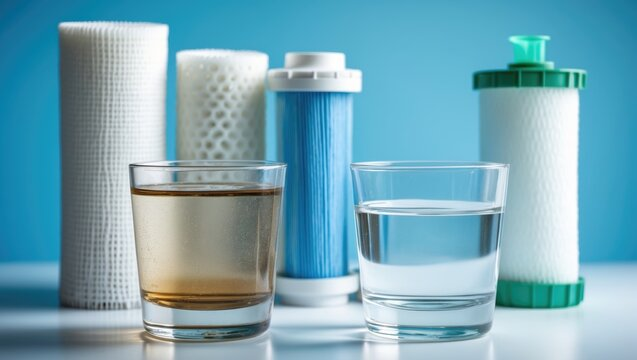 How to Choose Water Filter Cartridges? Material, Lifespan, Cost: A 3-Dimensional Comparison to Help Beginners Avoid Pitfalls
 Avoid Pitfalls|Don't Blindly Chase “Fine” in Home Water Filters! Choosing the Wrong Filtration Precision Means Wasting Money on Consumables
 The Ultimate Guide to Avoiding Water Purifier Pitfalls: 4 Essential Questions to Help You Steer Clear of All Traps!