Talk about the role of ultraviolet germicidal lamps and ultraviolet sterilization effect
Hello everyone, today Susan is here to answer some questions about water treatment equipment, I hope it can help you.
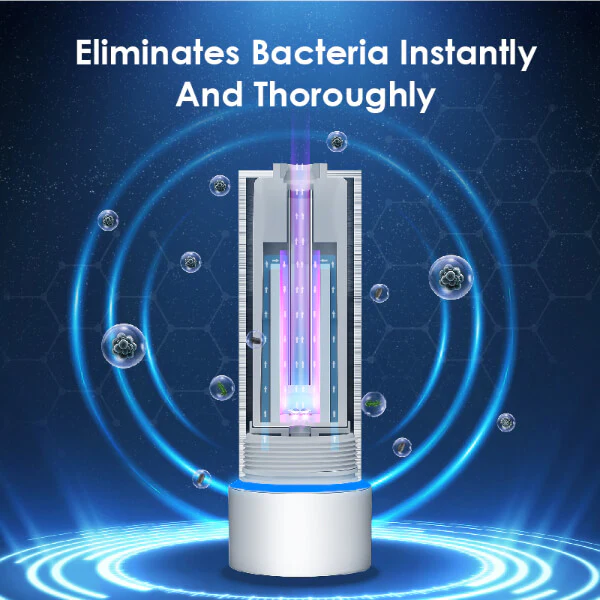
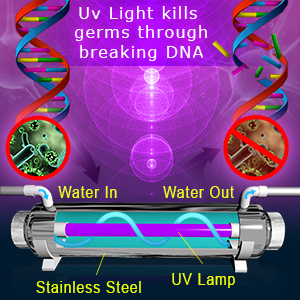
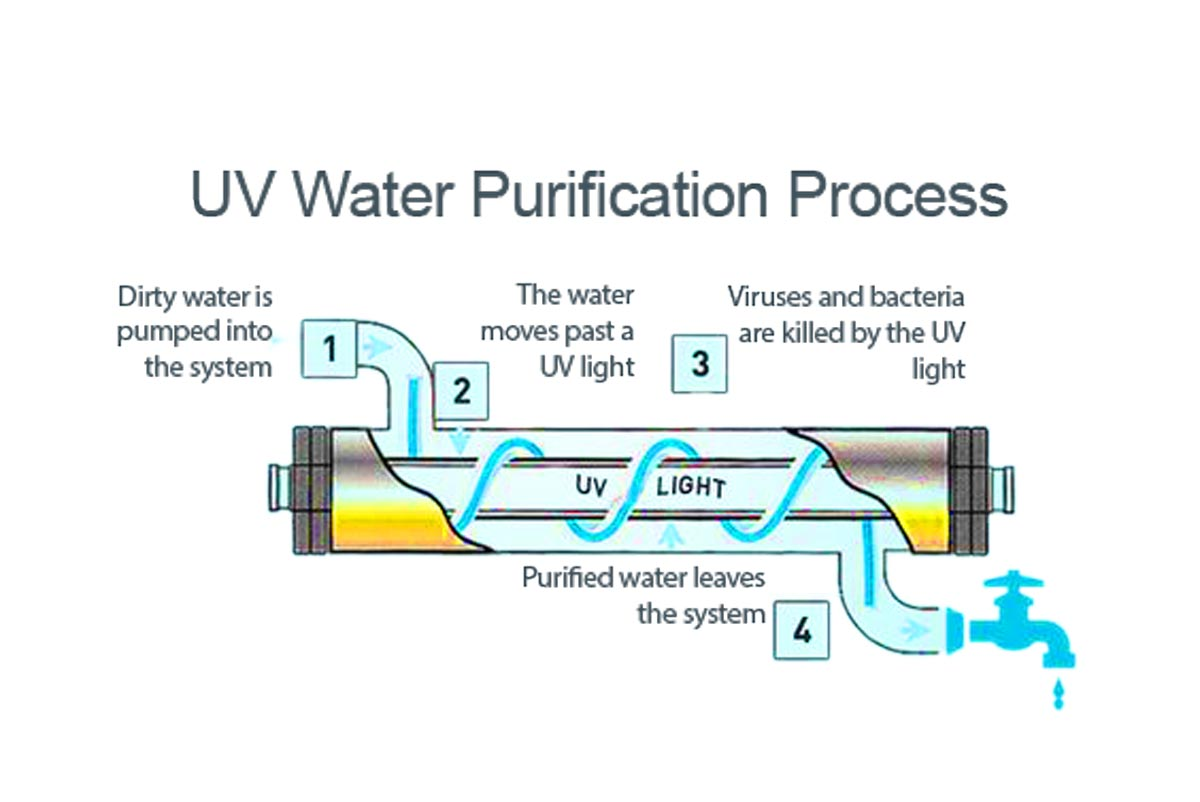
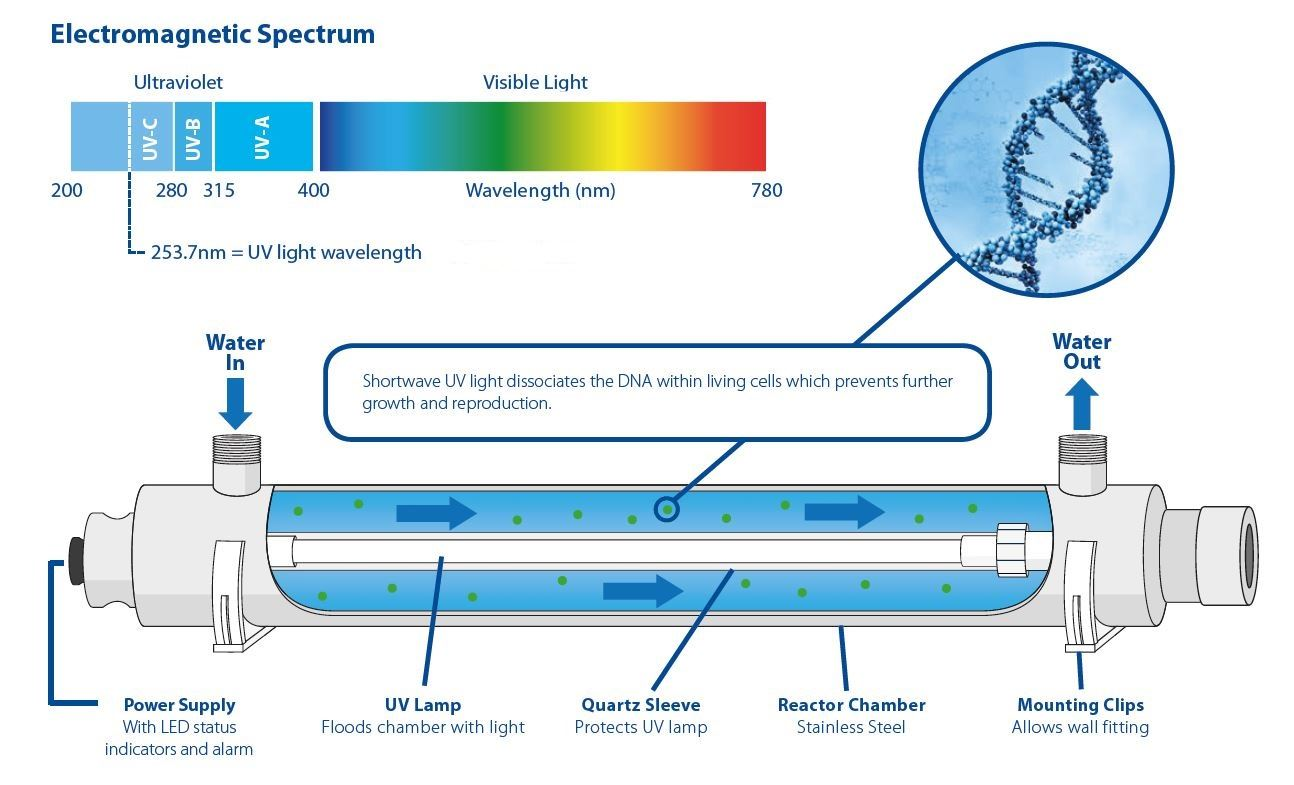
Ultraviolet germicidal lamps are mainly used for sterilization and disinfection of water and air, ultraviolet germicidal lamps produce ultraviolet C (UVC) irradiation of the water stream, when the water bacteria, viruses, algae organisms, etc. by a certain dose of UVC (wavelength of 254nm) irradiation, so that the DNA, RNA structure of its cells is destroyed, the cells can not regenerate, bacteria and viruses lose the ability to self-replication, so as to achieve sterilization and disinfection purposes The purpose of sterilization and disinfection is achieved. The use of ultraviolet sterilization and disinfection of water treatment includes the following areas:
Sewage sterilization: municipal sewage, hospital sewage, industrial sewage, oilfield reuse sewage.
Sterilization and disinfection of water: tap water, surface water (well water, river water, lake water, etc.).
Pure water, water purification, pure water disinfection: food and beverage, electronic ultrapure water, medicine, injection, cosmetics and other process water quality disinfection.
Circulating water disinfection: swimming pool water, landscape water has been industrial circulating cooling water.
Water disinfection for water reuse/algae removal.
Water disinfection for aquaculture and aquarium.
Agricultural irrigation water/marine water disinfection.
TOC explanation, ozone photodecomposition, residual chlorine photodecomposition, chloramine photodecomposition.
Mucus disinfection: high concentration of syrup, egg white, pharmaceutical concentrate and fruit juice disinfection.
Germicidal effect of UV germicidal lamps:
Ultraviolet light belongs to the broad-spectrum sterilization category, which can kill all microorganisms, including bacteria, tuberculosis, viruses, spores and fungi. Disinfection of urban sewage, the total number of bacteria down to 200/100ml below, E. coli 20/100ml below.
The addition of ultraviolet disinfection to drinking water terminals can directly meet the standard of drinking water.
Pre-disinfection of swimming pool water, the chlorine content of water can be reduced to 0.5 mg/liter, virus, bacteria removal rate of 99.99 or more.
The following is the ultraviolet germicidal lamp on the common bacterial viruses sterilization efficiency table:
Ultraviolet germicidal lamps actually belong to a low-pressure mercury lamp. Low-pressure mercury lamp is the use of low mercury vapor pressure (<10-2Pa) is excited and issued by the ultraviolet light, its hair spectral line has two main: one is 253.7nm wavelength; another is 185nm wavelength, these two are invisible to the naked eye ultraviolet light.
Germicidal lamps do not need to be converted to visible light, 253.7nm wavelength can play a good bactericidal effect, this is because the cells of the absorption spectrum of light waves have a law, in the 250 ~ 270nm ultraviolet light has the largest absorption, the ultraviolet light is absorbed in the cellular genetic material that is the role of the DNA, which plays a kind of photochemical effect, ultraviolet photon energy is absorbed by the DNA base pairs, causing mutations in the genetic material, causing the genetic material to mutate. The energy of the UV photons is absorbed by the base pairs in the DNA, causing the genetic material to mutate, causing the bacteria to die immediately or not be able to reproduce their offspring, thus achieving the purpose of sterilization.
Because ultraviolet light can kill cells, so ultraviolet disinfection should be careful not to directly irradiate the human skin, especially human eyes, ultraviolet germicidal lamps light up do not look directly at the lamp, due to the short-wave ultraviolet rays do not pass through the ordinary glass, wear glasses to avoid eye injuries. If the eyes are injured accidentally, the general situation is not a big deal, just like being burned by sunlight, serious eye drops or human milk to help recovery. Do not use ozone lamps where there are people, as high ozone concentration is not good for people.
Ultraviolet disinfection sterilization use is very wide, hospitals, schools, nurseries, cinemas, buses, offices, homes, etc., it can purify the air, eliminate musty smell, the second outside can also produce a certain amount of negative oxygen ions, by ultraviolet disinfection of the room, the air is particularly fresh. In public places, the ultraviolet disinfection, can avoid some germs through the air or through the object surface transmission. Long-life ultraviolet germicidal lamps in the water disinfection, environmental protection projects in the application of great significance, water disinfection equipment such as pure water system, generally in 24 hours are running, ultraviolet germicidal lamp life and reliability are required high, if the lamp life is short, replacement lamp cost is high, and is very inconvenient.

 Is your tap water hard? How to choose a home water purifier to soften water and protect appliances
 Is your tap water cloudy with sediment or rust? Here's how to choose a pre-filter that lasts, stays unclogged, and saves you hassle.
 Water Purifier Pitfalls to Avoid: Plug-in vs. Plug-free Models Understand These Key Points to Choose Right for Your Home Without Wasting Money
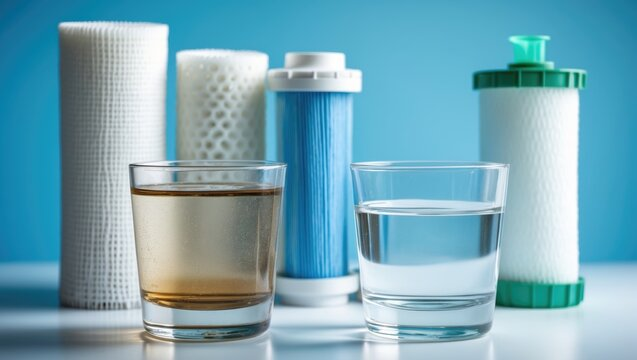 How to Choose Water Filter Cartridges? Material, Lifespan, Cost: A 3-Dimensional Comparison to Help Beginners Avoid Pitfalls