Water purification information

Is RO Water Harmful?

Views : 132824
Update time : 2021-08-12 14:33:00
With the increasingly serious water pollution, many families have begun to install water purifiers. As a small household appliance with strong decontamination capability and high quality water, RO water purifiers have been unanimously recognized by consumers. According to statistics, in 2015, the retail sales of reverse osmosis products in the online water purification market accounted for 50%, and the retail sales of reverse osmosis products in the offline water purification market increased to 86%. It can be seen from this that reverse osmosis water purifiers have already appeared. Out of the trend of occupying most of the market share.

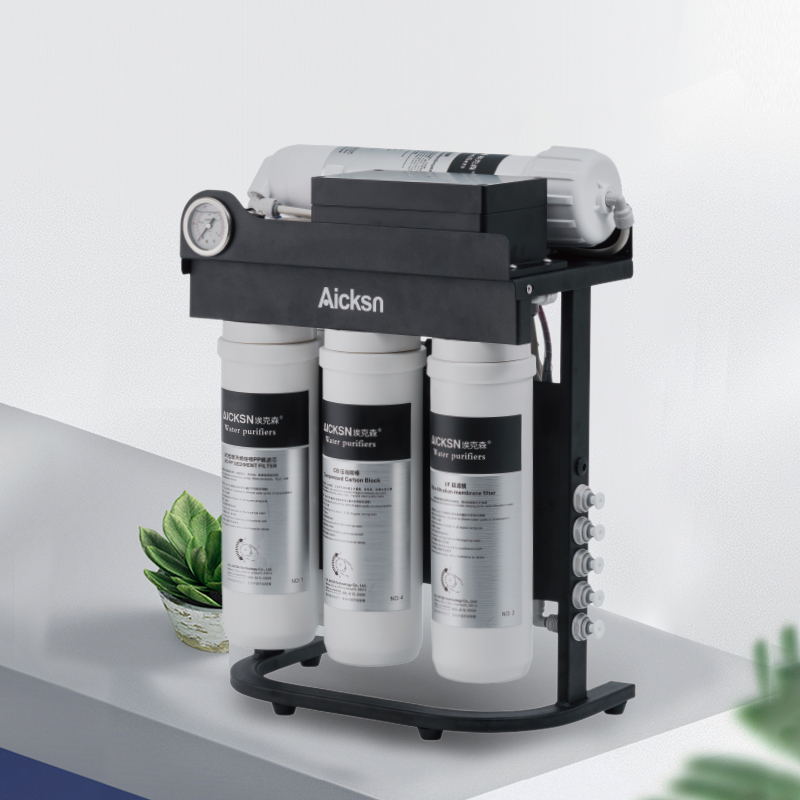
At the same time, there are also some different voices. They propose that the purified water purified by reverse osmosis membrane technology removes the minerals and trace elements in the water, and long-term drinking is not good for your health. So, what kind of water purifier in the world can completely remove the pollutants in the water and effectively retain the minerals in the water? Yes, that is the aicksn reverse osmosis double water purifier, a purified water to retain the minerals in the water, Meet your daily water needs; the other is pure water to remove scale and heavy metal microorganisms, and healthy drinking water.
 
 
So, will drinking this pure water be harmful to people?

In fact, RO reverse osmosis is a currently popular water treatment technology in the world. It physically filters the raw water without adding any compounds to produce a pure water machine that can be directly consumed by humans, also known as terminal water purification equipment. Since the pore size of the RO membrane is only one ten-thousandth of a micron, it can effectively remove harmful substances such as heavy metals, organic carcinogens, residual chlorine, bacteria and viruses, so the water produced by the reverse osmosis water purifier is cleaner and more hygienic than bottled water It can be drunk raw or boiled, which is in full compliance with the "Sanitary Standards for Drinking Water Quality" of the Ministry of Health.

The main function of water in the human body is to promote metabolism. In fact, many people don’t know that most of the elements in water cannot be directly absorbed and utilized by the human body. For example, a doctor tells you that drinking milk can replenish calcium, but they will never say drinking. Hard water with high calcium and magnesium ions can replenish calcium. In tap water, the content of minerals that are beneficial to the human body only accounts for 1% or less of all minerals. It is estimated that no one will drink most of the harmful substances because of this insignificant mineral. An authoritative person has conducted a systematic analysis on the scale of the thermos flask after three months of use. Among them, the only heavy metals that are harmful to the human body are: cadmium 0.034mg, lead 0.12mg, arsenic 0.21mg, mercury 0.44mg, these toxic substances Long-term accumulation in humans will cause a variety of diseases and accelerate human aging.

In addition, the minerals needed by the human body can be obtained from the daily diet. For example, the trace elements contained in a glass of apple juice are as good as 500 bottles of mineral water. Besides, the water produced by reverse osmosis does not have any scale and can moisturize the skin. It is also highly oxygen-rich and can activate the internal organs of the cells. So don't be careful, drinking RO water is harmless to the body.
Related News
Read More >>
What are the differences between common types of water used in laboratories? What are the differences between common types of water used in laboratories?
Jan .08.2026
What are the differences between common types of water used in laboratories? (Ultrapure water, deionized water, RO water, distilled water, double-distilled water)
How to Choose Laboratory Water? Deionized Water, Double-Distilled Water, or Ultrapure Water? How to Choose Laboratory Water? Deionized Water, Double-Distilled Water, or Ultrapure Water?
Jan .08.2026
The core distinctions between different types of laboratory water (such as ultrapure water, deionized water, RO water, etc.) ,which directly impact their suitability for various experiments.
Reverse Osmosis Water Treatment Technology: Principles, Applications, Membrane Fouling Prevention, Reverse Osmosis Water Treatment Technology: Principles, Applications, Membrane Fouling Prevention,
Jan .07.2026
Reverse Osmosis Water Treatment Technology: Principles, Applications, Membrane Fouling Prevention, Membrane Technology Comparison, and Equipment Analysis
Comparison of Characteristics for Nanofiltration/Ultrafiltration/Reverse Osmosis Systems! Comparison of Characteristics for Nanofiltration/Ultrafiltration/Reverse Osmosis Systems!
Jan .07.2026
Comparison of Characteristics and  Application Industries  for Nanofiltration/Ultrafiltration/Reverse Osmosis Water Filtration Systems!