Single-stage and double-stage reverse osmosis are mainly distinguished from the process:
◆ Single-stage reverse osmosis equipment
Single-stage reverse osmosis equipment, also known as one-stage reverse osmosis, raw water through the pretreatment system, precision filters, and then through the high-pressure pump, and then send the raw water to the reverse osmosis device, the direct output of water is called single-stage reverse osmosis.
Single-stage reverse osmosis equipment features: single-stage reverse osmosis under the action of external pressure, so that certain components of the solution selectively through, so as to achieve the purpose of desalination, purification or concentration separation of a practical technology; it can remove most of the ions in the water, but also remove the water of the microscopic particles, bacteria and impurities such as organics, water treatment equipment, advanced, economic means, single-stage reverse osmosis is mainly used in water quality, or water quality requirements are not good. Better, or water quality requirements are not very high users.
◆ Double-stage reverse osmosis equipment
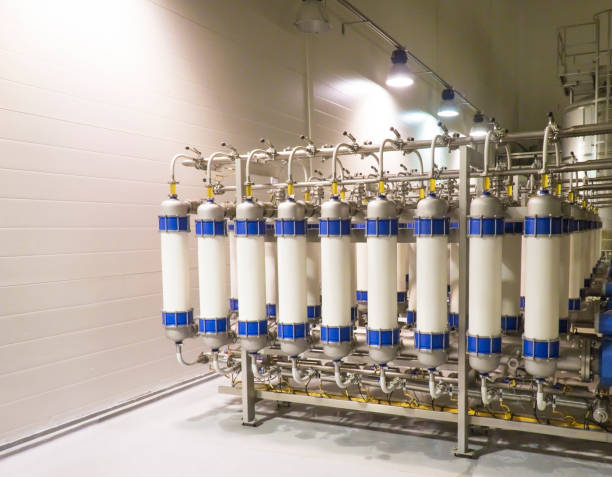
Two-stage reverse osmosis equipment, also known as two-stage reverse osmosis, two-stage reverse osmosis preparation system, is the tap water as raw water, first through the pre-treatment, security filtration, and then into the precision filter filtration, through the first high-pressure pump pressurized to the first level of reverse osmosis system, the first level of reverse osmosis output of the water by the second high-pressure pump pressurized to the second level of reverse osmosis system, the production of water is known as two-stage reverse osmosis.
Two-stage reverse osmosis equipment features: can remove particles in the water, colloids, organic impurities, heavy metal ions, bacteria, viruses, heat and other harmful substances and ninety percent of the dissolved salts, the system desalination rate is as high as ninety percent or more, two-stage reverse osmosis is mainly used in the poorer quality of water or water quality requirements of the user to use.
 Avoid Pitfalls|Don't Blindly Chase “Fine” in Home Water Filters! Choosing the Wrong Filtration Precision Means Wasting Money on Consumables
 The Ultimate Guide to Avoiding Water Purifier Pitfalls: 4 Essential Questions to Help You Steer Clear of All Traps!
 Is reverse osmosis water safe for long-term consumption?
 Analysis of the Structure and Working Principle of Ultrapure Water Equipment