Hello everyone, today I come to answer some questions for you about water purification equipment in water plant, I hope it can help you.
The principle of reverse osmosis scale inhibitor, like a masterful magician, cleverly dissolves the stubborn dirt in the water quality.
In the reverse osmosis system, the water quality often carries a variety of dissolved salts, organic matter and colloidal substances, these components in the high-pressure and low-temperature environment, it is easy to form a hard layer of scale, hindering the penetration of water molecules, resulting in a decline in system performance.

At this time, reverse osmosis scale inhibitor is like a guardian angel, with its unique chemical properties, deep into the water quality, and these scale layers to form a molecular level ‘dialogue’.
Through chelation, dispersion, inhibition and other mechanisms, it cleverly changes the solubility of insoluble salts in the water, so that these salts on the surface of the reverse osmosis membrane can not form a tight scale layer.
Imagine, these scale inhibitor molecules are like a group of brave explorers, travelling in every tiny corner of the water quality, looking for those potential scale hidden danger.
They interact with the ions and molecules in the scale layer, rescuing them from their original structure and preventing them from forming a hard scale layer.

At the same time, reverse osmosis scale inhibitor can also effectively prevent the formation of scale layer in the membrane surface further accumulation, to maintain the cleanliness and permeability of the membrane surface.
In this way, the reverse osmosis system will be able to work continuously and efficiently, providing users with pure and reliable water quality.
In short, reverse osmosis scale inhibitor has become an indispensable part of the reverse osmosis system with its unique chemistry and efficient performance.
It is like a loyal guardian, always protecting the stable operation of the system and ensuring the purity and safety of water quality.
These are my answers to some questions about water purification equipment for water plants, I hope it can help you. If you have other questions about water treatment, welcome to leave a message in the comment section, I will try my best to reply. If you find my article useful, please also give me a like, pay attention to my public number, tune in to more water treatment knowledge. Thank you for reading and have a nice life!

 Avoid Pitfalls|Don't Blindly Chase “Fine” in Home Water Filters! Choosing the Wrong Filtration Precision Means Wasting Money on Consumables
 The Ultimate Guide to Avoiding Water Purifier Pitfalls: 4 Essential Questions to Help You Steer Clear of All Traps!
 Is reverse osmosis water safe for long-term consumption?
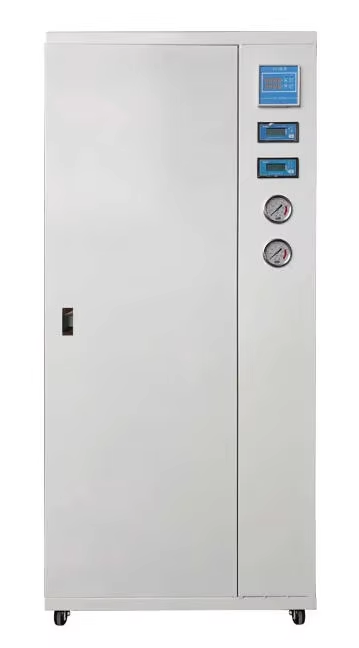 Analysis of the Structure and Working Principle of Ultrapure Water Equipment