Water purification information

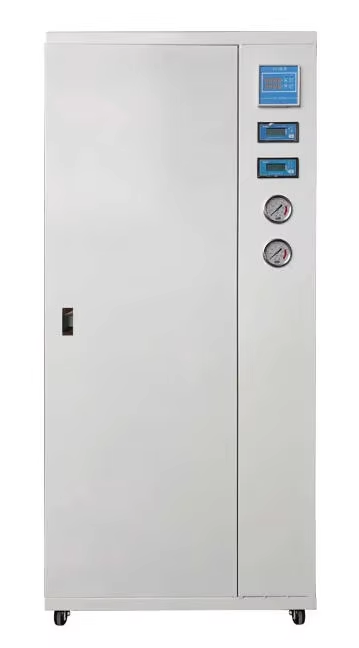
Commercial direct drinking water equipment

Views : 138332
Update time : 2021-12-30 17:50:42
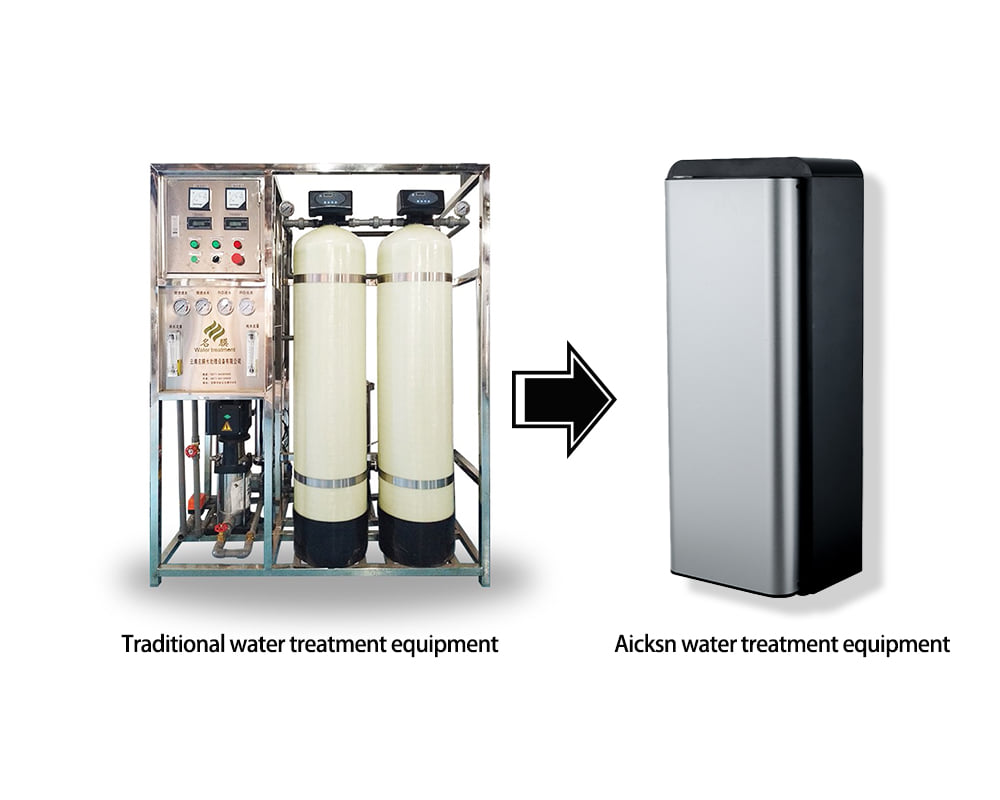
Traditional commercial direct drinking fountains are composed of raw water tanks, booster units, pretreatment units, membrane host units, circulating water supply units, disinfection units, automatic control units, special pipe networks, special water meters, and various drinking water terminals. This product uses membrane separation technology to safely and efficiently remove bacteria and viruses, and retain beneficial trace elements and minerals. Aicksn Group's quality water supply host uses ATS activated carbon fiber composite filter element + RO membrane filter element, four groups in parallel, + central water purification filter element + RO quality filter element, the equipment is fully automatic control, and water quality and faults are monitored at any time. No special personnel are required on duty. It can use man-machine interface and remote monitoring.
The water is soft and hard. The hardness of water is also called salinity, which refers to the content of calcium and magnesium salts dissolved in the water. Soft water includes rain water, snow water, pure water, etc. Hard water in nature includes tap water, surface water and groundwater. Tap water is hard water and can be softened with a water softener. Softener ion exchange technology uses the functional ions of polymer filter media such as resin to exchange calcium and magnesium ions in water to absorb excess calcium and magnesium ions in the water, reduce water hardness, and remove scale (calcium carbonate or magnesium carbonate).

Commercial straight drinking water dispenser

Reverse osmosis technology is used in commercial water dispensers. The principle of reverse osmosis is to apply pressure greater than the natural osmotic pressure on the raw water side to reverse osmosis water molecules on the high-concentration side to the low-concentration side. Since the pore size of the reverse osmosis membrane is much smaller than hundreds or thousands of times that of viruses and bacteria, various viruses, bacteria, heavy metals, solid solutions, contaminated organic matter, and calcium and magnesium ions cannot pass through the reverse osmosis membrane to soften and purify water. the goal of.

This product uses multi-stage purification and high-tech ingredients to make the water smaller and weaker, so that household tap water can be directly drunk, and the body is easier to absorb and adjust the body's acid-base balance.

Commercial direct drinking fountains are mainly installed and used in various public and commercial occasions, such as drinking water equipment in companies, factories, government units, airports, stations, schools, hospitals, chain milk tea, restaurants, restaurants, hotels and other large public places.
Related News
Read More >>
From Turbid to Clear: The Working Secrets of Reverse Osmosis Systems From Turbid to Clear: The Working Secrets of Reverse Osmosis Systems
Dec .18.2025
Reverse osmosis systems are far more than a simple combination of membrane housings and pumps; they represent separation engineering grounded in thermodynamics and materials science.
What Should You Consider When Choosing a Commercial Water Purifier? What Should You Consider When Choosing a Commercial Water Purifier?
Dec .17.2025
Faced with a vast array of products and complex technical specifications on the market, how do you select a commercial water purifier that truly meets your needs?
Safeguarding Every Drop of Water at Its Source: Unveiling Core Industrial Water Treatment Technologies and Equipment Safeguarding Every Drop of Water at Its Source: Unveiling Core Industrial Water Treatment Technologies and Equipment
Dec .16.2025
In the broader industrial and municipal sectors, water treatment is a much larger-scale, more technically complex, and more responsibility-heavy systematic endeavor.
Factors Affecting Reverse Osmosis (RO) Desalination Rate and Optimization Directions Factors Affecting Reverse Osmosis (RO) Desalination Rate and Optimization Directions
Dec .15.2025
Its influencing factors can be categorized into four major types: membrane characteristics, feedwater quality, operational process parameters, and system operation and maintenance.